Affect Heuristic (Why do we rely on our emotions to make quick decisions?)
The Affect Heuristic, a brief explanation
What is the Affect Heuristic?
The affect heuristic describes the tendency to make a decision quickly (and sometimes efficiently) that is influenced by their current emotion (e.g., fear, pleasure, happiness).
Examples
A long-term cigarette smoker may decide to quit smoking after seeing an image on their regular (re-designed) packet of cigarettes that illustrates the negative results of smoking on their lungs. If this elicits a negative emotion they may decide to quit smoking.
Whilst driving your car another driver cuts you off. For some people this could contribute to ‘road rage’ when this leads to negative emotions.
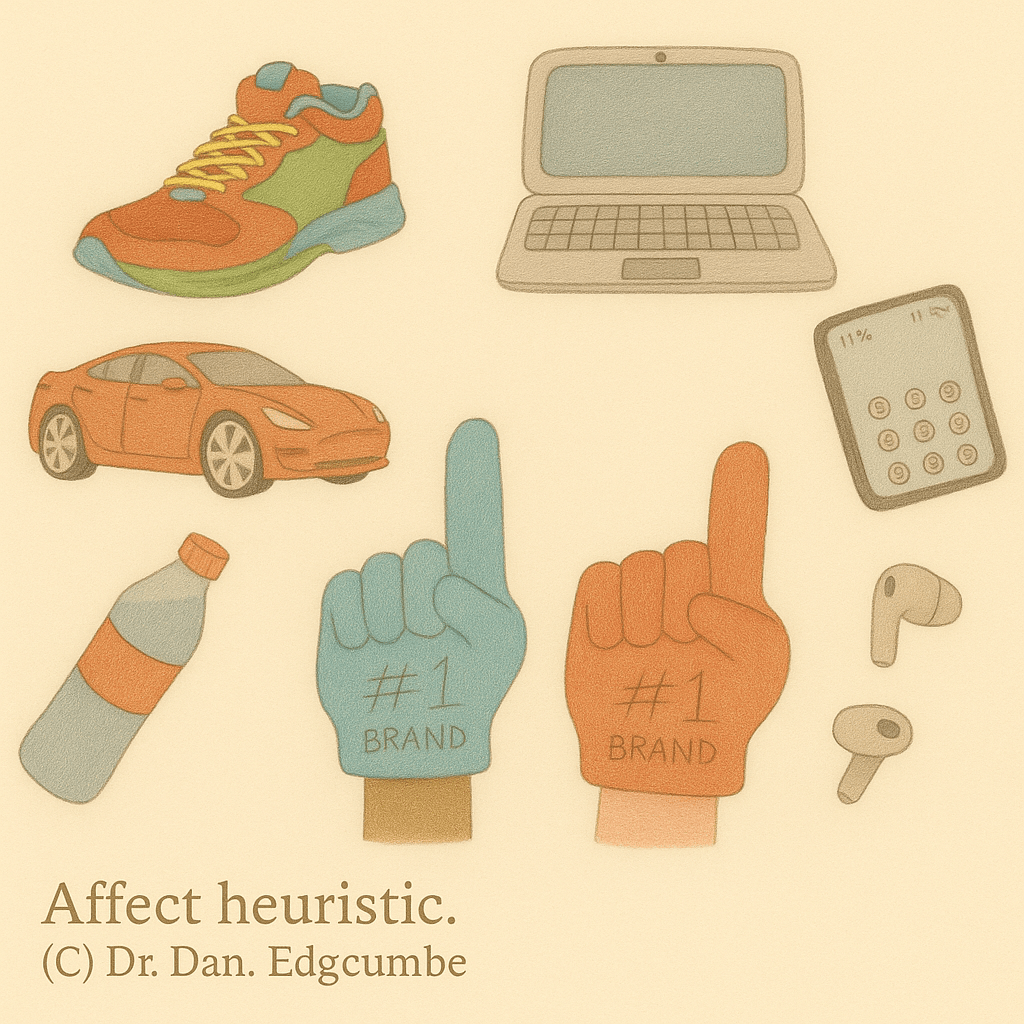
In consumer psychology if you experience brand loyalty the brand could be associated with positive emotion. Seeing a new product by the brand on sale could lead to purchasing that product.
The literature
Gibbons, J. & B. Bouldin. (2019). Videogame play and events are related to unhealthy emotion regulation in the form of low fading affect bias in autobiographical memory. Consciousness and Cognition, 74(102778). Doi: 10.1016/j.concog.2019.102778
Keller, C., Siegrist, M. & Gutscher, H. (2006). The role of the affect and availability heuristics in risk communication. Risk Analysis, 26(3), 631-639. Doi: 10.1111/j.1539-6924.2006.00773.x
 drdanedgcumbe.co.uk