Illusory Correlation (Why do we think that some things are related when they are not?)
The Illusory correlation a brief explanation
What is the Illusory correlation?
The illusory correlation is the tendency to perceive two things as being related when they are not.
Examples
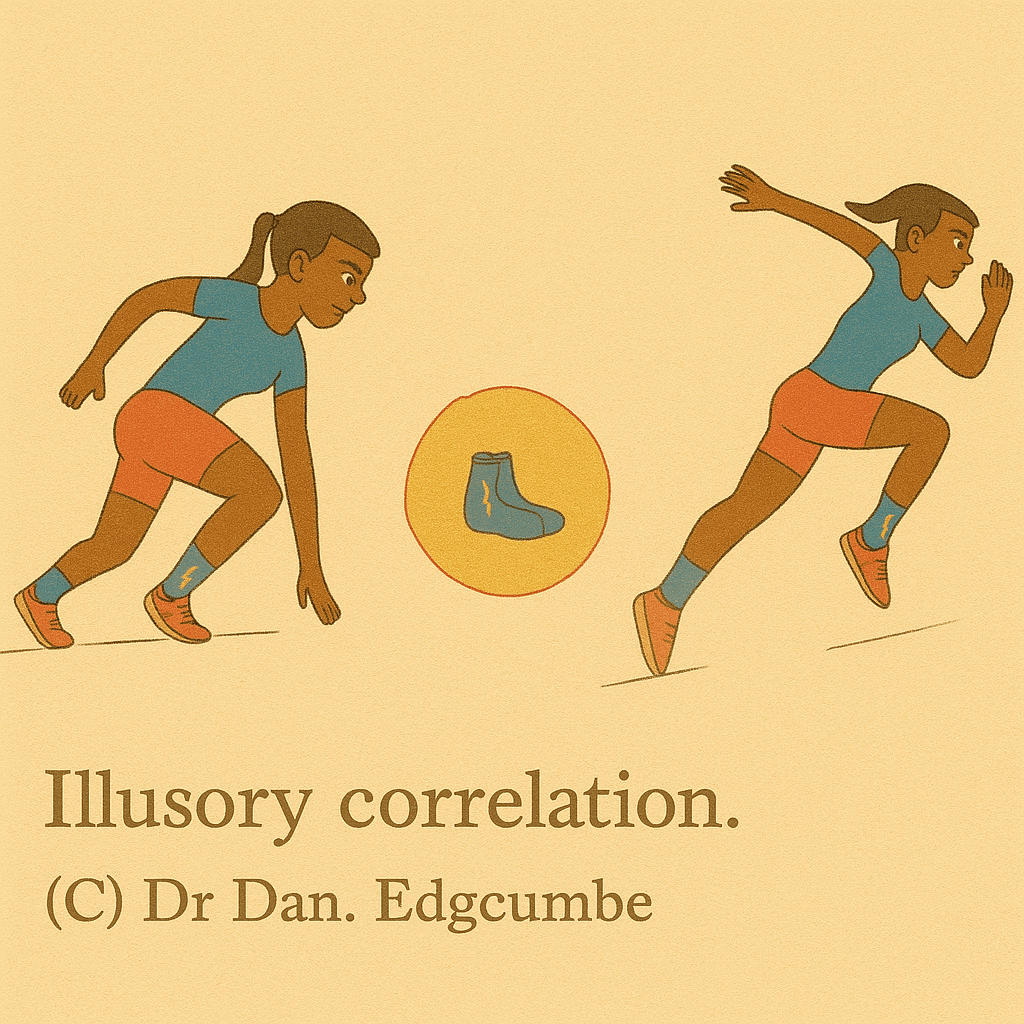
In sport an athlete might wear a pair of socks for their first couple of races then if they win they may start to believe the socks are lucky. An illusory correlation would then be created between wearing these socks and winning a race.
During gambling an individual may start to believe that a rabbit’s foot is lucky – drawing a correlation between winning and holding the rabbit’s foot.
The literature
Fiedler, K. (1991). The tricky nature of skewed frequency tables: an information loss account of distinctiveness-based illusory correlations. Journal of Personality and Social Psychology, 60(1), 24-36. Doi: 10.1037/0022-3514.60.1.24
Kammann, R. & Campbell, K. (1982). Illusory correlation in popular beliefs about the causes of happiness. New Zealand Psychologist, 11, 52-62.
 drdanedgcumbe.co.uk