Observer-Expectancy Effect (Why do we act differently when we know we are being watched?)
The observer-expectancy bias, a brief explanation
What is the Observer-Expectancy Effect?
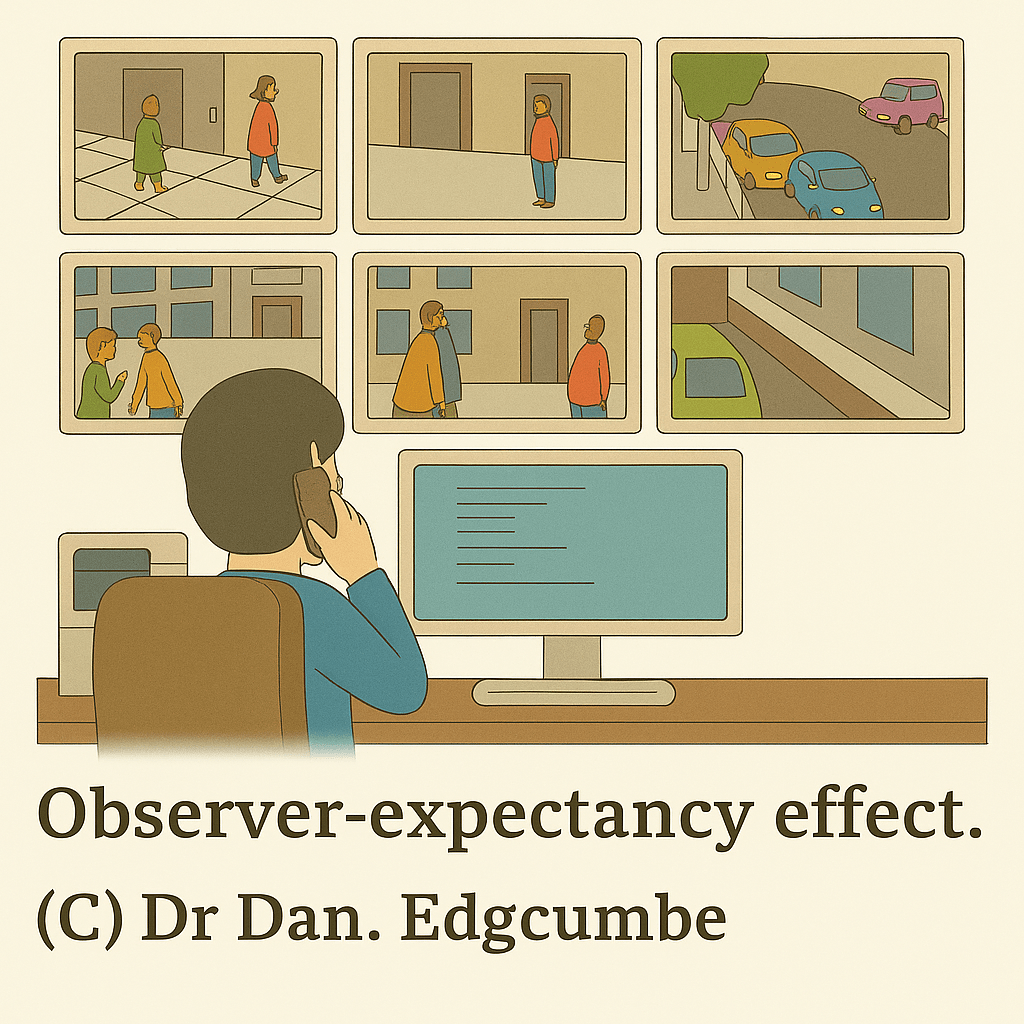
The observer-expectancy effect is the tendency to behave and act differently when we know we are being observed.
Examples
If you are taking part in a ‘reality’ television show you may act and behave differently to situations than you would normally.
You may practise answering interview questions before an important interview but when it comes to attending the interview you may answer previously known questions differently as a result of being observed by the interview panel.
The literature
Suhas, S., Sharma, N., Singh, G. P., Ray, S. & Andrade, C. (2021). Utilizing placebos to leverage the effects of cognitive-behavioral therapy in patients with depression: looking below the surface. Journal of Affective Disorders, 281, 145-146. Doi: 10.1016/j.jad.2020.11.120
 drdanedgcumbe.co.uk