Omission Bias (Why do we evaluate the decision to act more negatively than omitting an act?)
The omission bias, a brief explanation
What is the Omission Bias?
The omission bias is the tendency to evaluate the decision to act more negatively than a decision to omit an action, even when both decisions could have the same negative consequence.
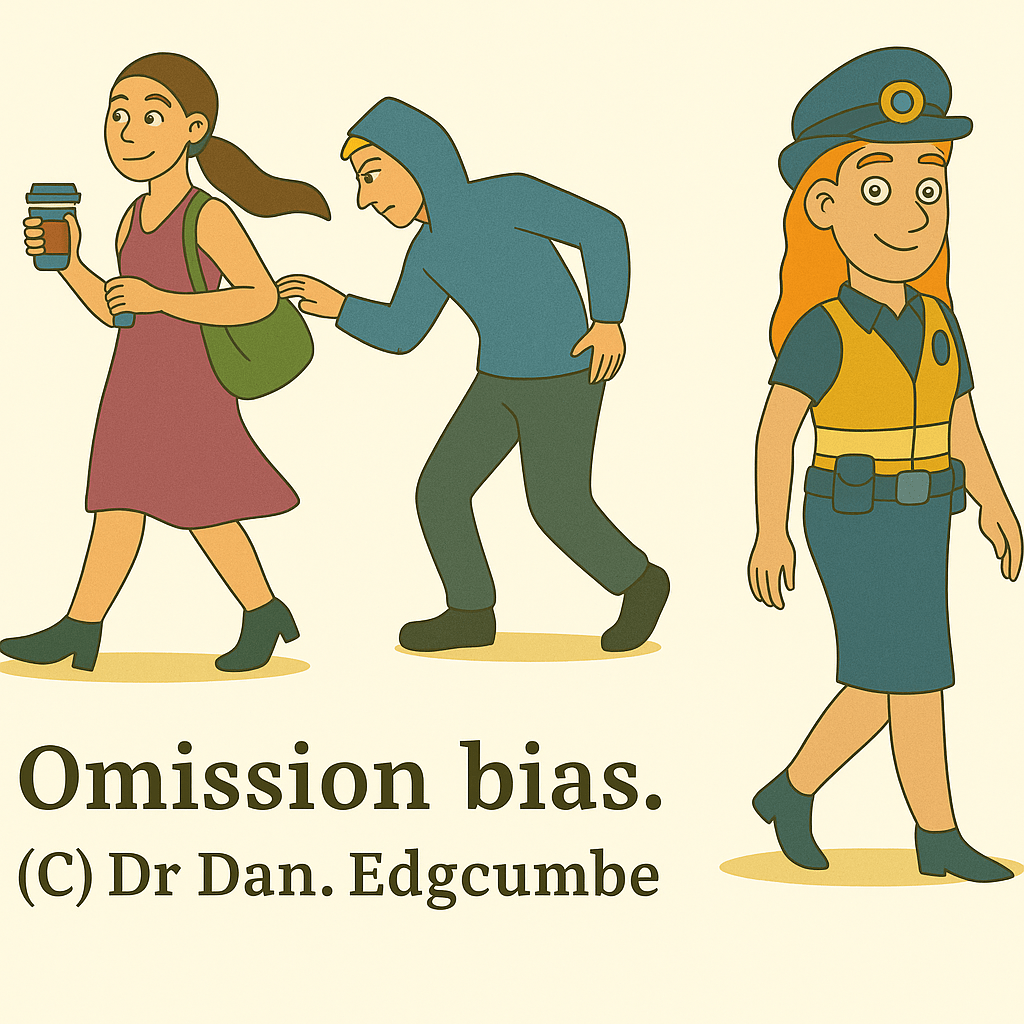
Examples
In the workplace you may witness one of your peers not completing their allocated jobs in a regular basis, but you choose not to say anything as you believe that doing so will have more negative consequences than the under-performing.
When deciding to vaccinate your child you may (wrongly) decide that you won’t have them vaccinated because you believe that the small chance of risk of side-effects from the vaccination is greater than that of what they are expected to be vaccinated against.
The literature
DoBonaventura, M. & Chapman, G. B. (2008). Do decision biases predict bad decisions? Omission bias, naturalness bias, and influenza vaccination. Medical Decision-Making, 28(4), Doi: 10.1177/0272989×07312723
Ritov, I. & Baron, J. (1990). Reluctance to vaccinate: omission bias and ambiguity. Journal of Behaioral Decision Making, 3(4), 263-277. Doi: 10.1002.bdm.3960030404
 drdanedgcumbe.co.uk